Bakuchiol serum NZ: a calm botanical guide
Evening skin can tell the story of a New Zealand day quickly. Wind, heating, strong light, and too many active-feeling products can leave your face looking a little flat and feeling less settled than it did in the morning.
A bakuchiol serum NZ ritual is for the person who wants a plant-based botanical renewal step, but does not want their skincare to feel loud, complicated, or overpromised. The aim is simple: support smoother-looking, softer-feeling skin with a measured serum layer that fits into a calm routine.
This guide explains what to look for, how to layer it, and where a bakuchiol-style serum can sit alongside cleanser, moisturiser, and night cream.
What is a bakuchiol serum NZ shoppers can understand clearly?
Bakuchiol is a plant-derived ingredient often discussed by people who are interested in retinol-style skincare. That comparison can be useful as a search term, but it can also become misleading when brands imply identical visible-looking benefits or make claims they cannot support.
For Lisah-Khayil, the safer and more honest wording is bakuchiol-style botanical serum or plant-based botanical renewal step. It describes where the product fits in a ritual without pretending to be a prescription active, a clinical treatment, or a shortcut to perfect skin.
In practical terms, a bakuchiol-style serum may suit someone who wants:
- a lightweight layer between cleansing and moisturising
- a botanical step for smoother-looking skin
- a gentler-feeling evening ritual
- support for mature skin that looks dull or tired
- a simple product to introduce slowly, not a crowded routine
If your skin is sensitive-feeling or reactive-feeling, the slow introduction matters as much as the ingredient. Start with less, use it less often, and let your skin tell you whether the rhythm feels right.
Bakuchiol-style serum versus a general face serum
Not every serum has the same job. Some are built mainly for hydration, some for brightness, and some for barrier comfort. A bakuchiol-style serum sits in the renewal category, but it still needs a supportive formula around it.
| Serum type | Main focus | Best fit in a routine |
|---|---|---|
| Hydrating serum | Water-binding comfort and plump-feeling skin | Morning or evening before moisturiser |
| Vitamin C serum | Brighter-looking, fresher-looking skin | Often morning, before day cream |
| Barrier support serum | Comfort for dry or overworked-feeling skin | When skin feels tight or depleted |
| Bakuchiol-style serum | Botanical renewal and smoother-looking skin | Usually evening, introduced slowly |
The Natural Retinol Botanical Serum is Lisah-Khayil's bakuchiol-style botanical serum. It is designed as a renewal step in a wider skincare ritual, not as a stand-alone fix.
What to look for in a botanical renewal formula
A good serum should feel coherent. The headline ingredient matters, but the rest of the formula decides whether the product feels wearable.
Look for supporting ingredients that help the skin feel nourished and comfortable:
- Bakuchiol-style botanical actives: A plant-based renewal focus for smoother-looking skin.
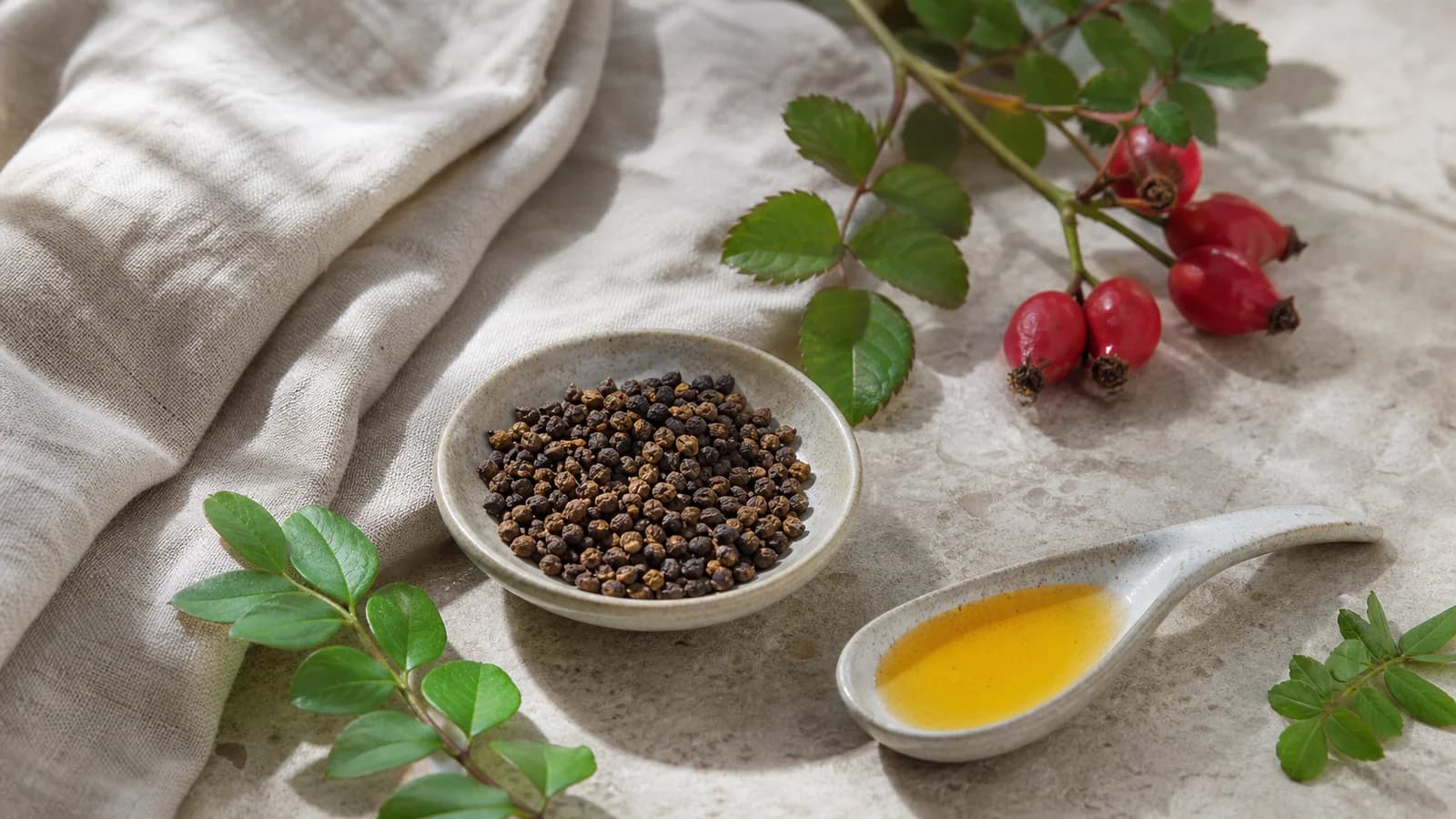
- Rosehip oil: A botanical oil that helps skin feel soft, replenished, and well nourished.
- Plant-derived squalane: A lightweight lipid that supports a comfortable skin feel.
- Jojoba oil: A skin-softening oil often used in balanced facial formulas.
- Vitamin E: Used in cosmetic skincare to support the look of skin exposed to daily environmental stress.
- Plant-derived glycerin: A humectant that helps skin feel hydrated.
Avoid judging a serum only by a single ingredient name on the front of the bottle. The texture, pairing ingredients, and instructions all matter, especially if your skin becomes easily unsettled.
How to introduce bakuchiol-style skincare slowly
The easiest mistake is adding too many new steps at once. If you introduce cleanser, exfoliator, serum, and night cream in the same week, you will not know which step your skin likes or dislikes.
Start with a quiet evening ritual:
- Cleanse with a gentle, non-foaming cleanser.
- Pat skin until it is dry or only slightly damp.
- Apply one to two drops of serum to the face and neck.
- Wait a minute for the texture to settle.
- Finish with moisturiser or night cream.
Use the serum two or three nights a week at first. If your skin feels comfortable, you can slowly increase the rhythm. If it feels tight, warm, or unsettled, pause the serum and return to cleanser and moisturiser until your skin feels steady again.
For a soft base, the honey cream cleanser is a practical first step because it is non-foaming and made for dry, sensitive-feeling routines.
Where it fits in a Lisah-Khayil evening ritual
Think of the evening routine as a sequence of textures, not a race to use everything you own.
Begin with cleansing. Apply your serum only after skin is clean and calm-feeling. Then seal the ritual with a moisturiser that gives the surface a cushioned finish.
A simple Lisah-Khayil rhythm could look like this:
- Cleanse: Honey Cream Cleanser
- Renewal serum: Natural Retinol Botanical Serum
- Comfort finish: Botanical Night Cream
On nights when skin feels overworked, skip the renewal step and choose comfort. The barrier repair serum NZ guide is a useful next read if your skin often feels depleted after active-feeling products.
What sensitive-feeling skin should keep in mind
Sensitive-feeling skin does not need a dramatic routine. It usually needs consistency, restraint, and fewer surprises.
Before using a new serum widely, patch test first. Then apply a small amount in the evening and keep the rest of the routine familiar. Avoid introducing a new exfoliator or another active-feeling serum on the same night.
If your skin feels reactive-feeling after a windy day, travel, illness, poor sleep, or a season change, wait. A serum works best when the base routine already feels comfortable.
The goal is not to push through discomfort. It is to build a skincare ritual your skin can recognise.
How to compare bakuchiol-style products without overbuying
Search visible-looking benefits for bakuchiol serum can be noisy. Some pages lean hard on bold claims, while others list ingredients without explaining how the product actually fits into a routine.
When comparing options, ask:
- Does the brand explain what the product does in cosmetic, realistic language?
- Is the ingredient list easy to find?
- Does the formula include comfort-supporting oils or humectants?
- Are the usage instructions slow enough for sensitive-feeling skin?
- Does the product fit with the cleanser and moisturiser you already use?
For broader ingredient context, the Bakuchiol NZ guide explains how Lisah-Khayil talks about bakuchiol-style skincare without turning it into an exaggerated promise.
Frequently asked questions
What is bakuchiol serum used for?
A bakuchiol-style serum is used as a botanical renewal step in a skincare ritual. It can support smoother-looking, softer-feeling skin when introduced gradually and layered with moisturiser.
Is bakuchiol the same as retinol?
No. Bakuchiol-style skincare is often discussed near retinol routines, but it is not the same ingredient. Lisah-Khayil describes it as a plant-based botanical renewal step.
Can sensitive-feeling skin use a bakuchiol-style serum?
Sensitive-feeling skin may prefer a slow, careful rhythm. Patch test first, start two or three nights a week, and avoid adding several active-feeling products at the same time.
Should I use bakuchiol serum morning or night?
Many people prefer it in the evening because it pairs naturally with a slower cleanse, serum, and night cream ritual. Choose the timing you can use consistently and comfortably.
What should I layer after bakuchiol serum?
After the serum settles, apply moisturiser or night cream. This helps the skin feel cushioned and keeps the routine balanced.
How long should I try a new serum before deciding?
Give your skin time, but do not ignore discomfort. If the product feels comfortable, use it consistently for several weeks before judging the look and feel of your skin. If your skin feels unsettled, pause and simplify.
A calm serum ritual is not about doing more. It is about choosing one thoughtful step, using it gently, and letting the rest of the routine stay steady.