Cream Cleanser for Dry Skin NZ: A Calm Guide
Morning light is honest on dry skin. It shows the tight places around the cheeks, the soft flaking near the nose, and the way a fast foaming wash can leave your face feeling cleaner than comfortable.
A cream cleanser for dry skin NZ can be a quieter first step. Instead of chasing a squeaky finish, it helps lift the day away while leaving skin feeling soft, supple, and less stripped. For sensitive-feeling or reactive-feeling skin, that texture difference matters.
This guide walks through what makes cream cleansing useful in New Zealand weather, how to use it without heaviness, and where a botanical honey cream cleanser can fit in a simple ritual.
Why a cream cleanser for dry skin NZ can feel gentler
Dry skin often needs less drama from the cleansing step. Wind, indoor heating, air conditioning, and long days in strong NZ light can all leave skin feeling tight before you have even reached for your moisturiser.
Foaming cleansers are not automatically harsh. Some are beautifully made. The issue is the finish many people expect from foam: a very clean, almost polished feel. On dry or sensitive-feeling skin, that can tip into tightness.
A cream cleanser works differently. It uses a richer, cushioning texture to loosen makeup, daily sunscreen residue, excess oil, and dust. When it is massaged slowly and removed with lukewarm water or a soft cloth, it can help skin feel clean without that stretched, over-washed sensation.
For Lisah-Khayil, the cleansing step is not about making skin feel bare. It is about preparing your face for the rest of your skincare ritual.
Cream cleanser vs foaming cleanser for dry skin
The easiest way to choose is to notice how your skin feels five minutes after cleansing, before serum or moisturiser.
| Cleanser style | Often suits | Watch for |
|---|---|---|
| Cream cleanser | Dry, mature, sensitive-feeling, or reactive-feeling skin | Residue if too much is used or not removed well |
| Foaming cleanser | Oilier skin types or those who like a lighter rinse | Tightness, dryness, or a squeaky finish |
| Balm or oil cleanser | Makeup-heavy routines or first cleanse at night | Heaviness if not followed by careful removal |
| Gel cleanser | Normal to combination skin | Dehydrated-feeling skin if the formula is too active |
A natural cream cleanser New Zealand shoppers can use daily should feel soft, not filmy. It should cleanse without asking the skin to recover from cleansing.
How to use cream cleanser on dry or sensitive-feeling skin
Small details change the result. If your face feels tight after cleansing, adjust the method before assuming the product is wrong.
- Start with dry or lightly damp skin. Use a small amount, roughly the size of a large pea.
- Warm it between your fingertips so the texture spreads easily.
- Massage for 30 to 60 seconds, keeping the pressure light around the cheeks and eye area.
- Add a little lukewarm water to soften the cream.
- Remove with your hands or a very soft cloth. Avoid hot water and rough towelling.
- Pat, do not rub, then follow with serum or moisturiser while skin still feels slightly fresh.
If you wear heavier makeup, you may prefer a first cleanse to remove makeup, then a small second cleanse with a cream texture. If your skin is very dry, one careful cleanse at night and a simple rinse in the morning may feel better than cleansing twice a day.
What to look for in a cream cleanser for dry skin
A good cream cleanser does not need a long list of fashionable actives. For dry skin, the base texture matters as much as the headline ingredients.
Look for:
- A non-foaming or low-foaming texture.
- A comfortable slip that lets your fingertips move without dragging.
- Botanical oils or butters used for cushion and softness.
- Honey or humectant-style ingredients that help skin feel supple.
- A finish that feels clean, not coated.
- Clear instructions for removal.
Be cautious with cleanser formulas that rely on a strong tingle, heavy fragrance, or a very polished after-feel. Those signs are not proof of harm, but they can be a poor fit when skin already feels dry, easily unsettled, or reactive-feeling.
Where Honey Cream Cleanser fits
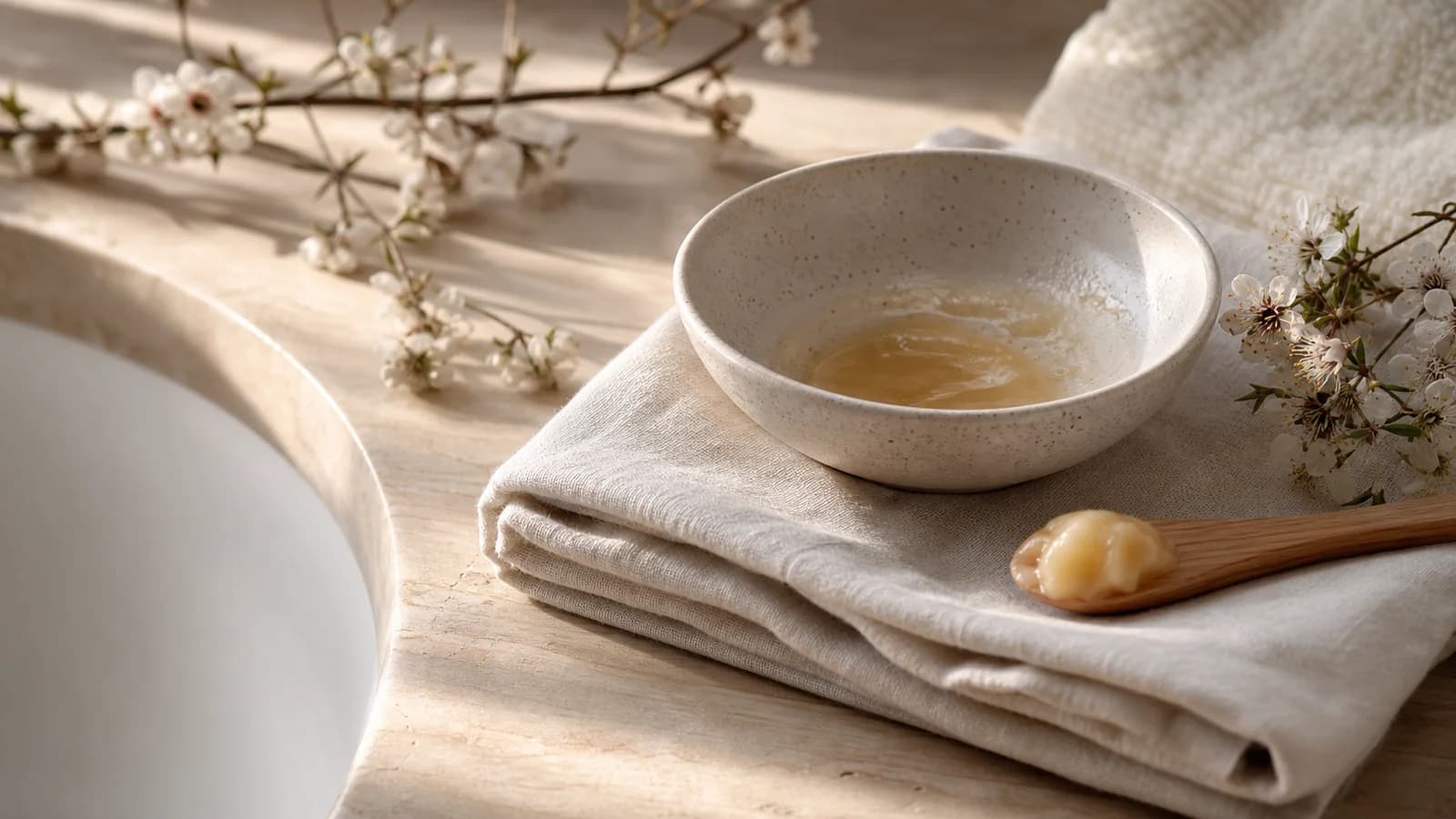
Lisah-Khayil's honey cream cleanser is made for this slower style of cleansing. It is a non-foaming cream cleanser for skin that prefers comfort over squeak.
The texture is the point. It gives your hands time to work gently, which is useful when dry skin needs cleansing without unnecessary friction. Used with lukewarm water and a soft cloth, it can help skin feel clean, cushioned, and ready for the next step.
If your skin often feels dry after washing, this is the cleanser we would try before adding more steps. A better cleanse can make the rest of your ritual feel more settled.
Building a simple dry-skin cleansing ritual
Dry skin usually responds better to consistency than complexity. A calm evening ritual might look like this:
- Cleanse with a small amount of Honey Cream Cleanser.
- Press in a serum while skin still feels fresh. For easily unsettled skin, a barrier support serum can be a thoughtful next step.
- Seal with a moisturiser. In the morning, a natural day moisturiser gives lighter daily comfort. At night, a richer cream can suit skin that wakes feeling tight.
This does not need to become a 10-step routine. For many people, the most useful shift is simply moving from a stripping cleanse to a cream cleanse, then applying moisture before skin fully dries.
For more cleansing detail, pair this guide with our journal piece on how to cleanse sensitive skin. If you are comparing cleanser textures, the honey cleanser for sensitive skin NZ guide also sits close to this topic.
Common mistakes that leave dry skin feeling tighter
The cleanser is only one part of the result. These small habits can make even a gentle cleanser feel less comfortable:
- Using hot water because it feels soothing in the moment.
- Cleansing for too long or with too much pressure.
- Using a textured face cloth every day.
- Waiting until skin is completely dry before applying serum or moisturiser.
- Using a foaming second cleanse after a cream cleanse when your skin does not need it.
- Changing too many products at once, then not knowing what helped or unsettled your skin.
Dry skin needs patience. Give one change at least a week of ordinary use before judging it, unless your skin clearly feels uncomfortable.
FAQ
Is a cream cleanser good for dry skin?
Yes, a cream cleanser can be a good fit for dry skin because it usually has a softer, more cushioning texture than a foaming cleanser. The goal is clean skin that still feels comfortable after rinsing.
Can I use a cream cleanser every day?
Most people can use a gentle cream cleanser daily. If your skin feels very dry in the morning, try cleansing properly at night and using only lukewarm water or a light rinse in the morning.
Does cream cleanser remove makeup?
A cream cleanser can remove light makeup and daily residue. For heavier makeup, you may need a first makeup-removal step, then a small second cleanse with your cream cleanser.
Should dry skin use a foaming cleanser?
Some dry skin can tolerate a mild foaming cleanser, but many people prefer a non-foaming cream texture because it leaves skin feeling less tight. Let your skin's after-feel guide you.
What should I apply after a cream cleanser?
Apply serum or moisturiser while your skin still feels slightly fresh. This helps your next steps spread easily and can make the whole ritual feel more comfortable.
A quieter first step
If your skin feels tight after washing, the problem may not be that you need more products. You may need a gentler first step.
A cream cleanser for dry skin NZ is less about luxury for its own sake and more about texture, patience, and restraint. Cleanse softly, rinse with care, and let the rest of your ritual begin from skin that feels comfortable.