Coffee Face Scrub NZ: A Gentle Guide
Morning light has a way of showing texture. The dry patch near your cheekbone, the dullness that settles after wind, the slightly rough feeling that cleanser alone does not shift. If you are searching for a coffee face scrub NZ skin can use without turning the bathroom sink into a harsh polishing ritual, the real question is not whether coffee sounds natural. It is whether the scrub is made, used, and rinsed in a way that respects your skin.
Coffee can be a beautiful exfoliating ingredient when the grounds are fine, the base is creamy enough, and the pressure is light. It can also be too much if the scrub is coarse, overused, or borrowed from a body-care routine. Face skin is thinner and more easily unsettled than elbows, knees, or feet. It deserves a slower approach.
This guide explains what to look for in a coffee face scrub, how often to use one, and how to pair exfoliation with a gentle cleanse and calm moisture afterwards.
Coffee face scrub NZ: what makes it different from a body scrub?
A coffee face scrub should feel refined, not gritty. The grounds should be small enough to move across damp skin without scratching, and the formula should have enough slip so your fingertips do not drag.
Many coffee scrubs sold in New Zealand are designed for the body. They can be useful for rougher areas, but that does not automatically make them right for the face. Body scrubs often lean on larger particles, sugar crystals, salt, or strongly scented oils. Those details can feel satisfying on arms or legs, but too assertive on cheeks, around the nose, or near the jawline.
For the face, look for:
- Finely milled coffee or soft natural exfoliating particles
- A creamy or oil-softened texture with good glide
- Clear use directions for the face, not only the body
- A short contact time, followed by a thorough rinse
- Supportive ingredients that help skin feel soft after cleansing
If your skin is sensitive-feeling or reactive-feeling, choose the quietest option. A scrub does not need to tingle, sting, or leave your face flushed to be doing its job.
How coffee exfoliation supports dull-looking skin
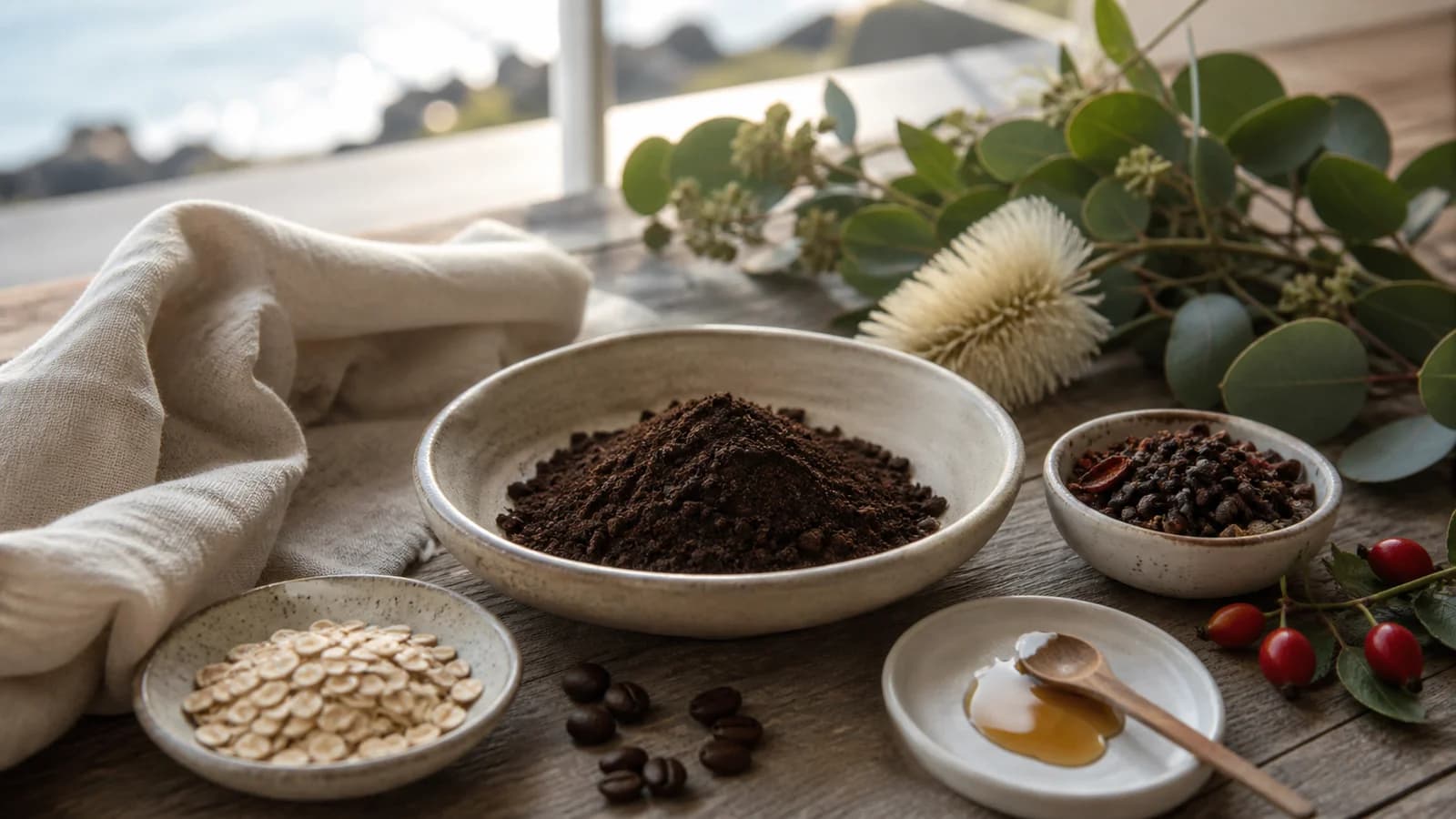
Physical exfoliation works by loosening surface build-up. Think of it as lifting away the fine layer that can make skin look flat, dry, or uneven in texture. Coffee grounds bring a sensory element too: warmth, aroma, and a grounded feeling that suits a slow skincare ritual.
The goal is polish, not pressure. You are not trying to scrub skin into brightness. You are giving the surface a brief, careful reset so moisturiser and serum can sit more comfortably afterwards.
This is where a botanical approach matters. A coffee-based formula should not leave skin feeling stripped. Pairing exfoliating particles with honey, botanical oils, or softening ingredients can help skin feel cushioned while you massage and rinse.
For Lisah-Khayil readers, the closest fit is the botanical face exfoliator, a natural coffee face scrub style product made for occasional facial exfoliation rather than daily scrubbing.
Coffee scrub, cleanser, or both?
A scrub is not a replacement for your cleanser. It is an occasional step after cleansing, used when your skin feels ready for extra smoothing.
Start with a gentle cleanse to remove surface oil, sunscreen residue, or makeup. A creamy, non-foaming cleanser is often more comfortable for dry-feeling or easily unsettled skin because it does not rely on a squeaky finish. The honey cream cleanser is the natural pairing here: cleanse first, rinse, then exfoliate only if your skin feels settled.
A simple order looks like this:
- Cleanse with lukewarm water and a soft, non-foaming cleanser.
- Pat away excess water, leaving skin damp.
- Use a small amount of scrub, about the size of a pea or small almond.
- Massage lightly for 20 to 30 seconds, avoiding the eye area.
- Rinse well with lukewarm water.
- Follow with serum or moisturiser while skin is still slightly damp.
If your face feels warm, tight, or stingy after cleansing, skip the scrub that day. Exfoliation belongs on calm-feeling skin.
How often should you use a coffee face scrub?
For most NZ skin, once a week is enough. Some people may enjoy twice a week, but more is rarely better, especially if your skin already feels dry, sensitive-feeling, or exposed to wind and seasonal shifts.
Use this simple guide:
| Skin feel | Suggested rhythm | What to watch for |
|---|---|---|
| Dry-feeling or tight | Once every 7 to 10 days | Tightness after rinsing |
| Dull but comfortable | Once weekly | Roughness returning between uses |
| Oily-feeling but easily unsettled | Once weekly | Red-looking patches or tenderness |
| Mature or reactive-feeling | Once every 10 to 14 days | Skin feeling thin, warm, or over-polished |
Your skin should feel smoother, not louder. If it looks more flushed than usual or your moisturiser tingles afterwards, use the scrub less often and soften the rest of the ritual.
For a broader exfoliation rhythm, you can also read our journal guide on natural face exfoliator NZ, which sits beside this coffee-specific article.
What to avoid in a face scrub
The weakest assumption in many scrub routines is that natural particles are always gentle. They are not. Natural materials can still be too coarse, too sharp, or too frequent for the face.
Avoid:
- Large, jagged, or very gritty particles
- Salt scrubs on the face
- Strong fragrance when your skin is already reactive-feeling
- Scrubbing over broken, freshly shaved, or visibly angry-looking skin
- Daily use
- Hard pressure, cleansing brushes, or exfoliating cloths at the same time
Also avoid layering too many active steps on scrub night. If you exfoliate, keep the rest of the ritual plain: cleanse, scrub, rinse, comfort, moisturise.
A calm evening ritual for smoother-feeling skin
Coffee exfoliation often suits evening best. There is no rush, and your skin can be left clean, soft, and supported overnight.
Try this:
- Cleanse slowly with the honey cream cleanser.
- Use your coffee face scrub with feather-light pressure.
- Rinse until no particles remain near the nose, hairline, or jaw.
- Press on a simple serum if your skin wants extra comfort.
- Seal with a nourishing night cream.
The rosehip night cream is a good finishing step when skin feels dry or wind-worn, because it gives the ritual a richer cushion without turning exfoliation into a hard-working product routine.
If your skin tends to feel unsettled, alternate scrub nights with barrier-support nights. The Barrier Support Serum can sit in the calmer part of the week, when you want skin to feel comforted rather than polished.
How to tell if your scrub is working
A well-chosen coffee face scrub should leave subtle signs. Skin may feel smoother under your fingertips. Moisturiser may spread more evenly. Makeup, if you wear it, may sit less patchily the next morning.
It should not leave your face feeling raw, hot, or shiny-tight. That polished-glass feeling can be a sign you have done too much.
Useful signs:
- Skin feels soft after moisturiser, not squeaky after rinsing
- Texture feels more even for a few days
- Dry flakes lift without extra rubbing
- Your usual serum or cream feels comfortable afterwards
Signs to pause:
- Stinging when you apply plain moisturiser
- New tenderness around the nose or cheeks
- Skin looking more red than usual for longer than a few minutes
- A tight, stretched feeling after rinsing
When in doubt, step back. A slower rhythm nearly always serves sensitive-feeling skin better than trying to force instant smoothness.
FAQ
Can I use a coffee face scrub every day?
No. Daily physical exfoliation is usually too much for the face. Start with once a week, or once every 10 to 14 days if your skin is sensitive-feeling.
Is coffee scrub good for dry-feeling skin?
It can be, if the particles are fine, the texture has enough slip, and you moisturise afterwards. Avoid hard pressure and skip exfoliation when skin already feels tight or unsettled.
Should I cleanse before using a coffee face scrub?
Yes. Cleanse first so the scrub is working on damp, clean skin rather than makeup, sunscreen residue, or the day layered on top.
Can I use a body coffee scrub on my face?
Usually, it is better not to. Body scrubs are often coarser or more strongly scented. Choose a face-specific scrub with fine particles and gentle directions.
What should I apply after exfoliating?
Keep it simple. Use a calming serum or moisturiser that helps skin feel comfortable. On dry-feeling nights, a richer botanical night cream can be a good finish.
Coffee can belong in a face ritual, but only when it is used with restraint. Let the scrub be a small weekly polish, then let cleanser, serum, and moisturiser do the quiet daily work.