Natural Face Exfoliator NZ: A Gentle Guide
If you are searching for a natural face exfoliator NZ guide, you are probably not looking for a stripped-back, squeaky-clean feeling. You are looking for skin that feels smoother, softer, and more comfortable after a small, considered step in your ritual.
In New Zealand, that balance matters. Wind, seasonal shifts, indoor heating, and strong sunlight can leave skin feeling dry or easily unsettled. Exfoliation can help lift away dull surface buildup, but the way you do it matters more than how often you do it.
This guide is for choosing and using a natural face exfoliator with a light hand: no scrubbing for the sake of scrubbing, no complicated schedule, and no promises a cosmetic product should not make.
Natural face exfoliator NZ: what gentle really means
A gentle exfoliator is not just one with natural ingredients. It is one that respects the feel of your skin before, during, and after use.
For a botanical face ritual, gentle usually means:
- A fine, even texture rather than large scratchy particles
- A soft base that cushions the exfoliating ingredients
- Short contact time, especially for sensitive-feeling skin
- Light fingertip pressure, not force
- Enough slip that the product moves easily over damp skin
The aim is polish, not punishment. If your skin feels tight, hot, or unusually flushed afterwards, that is useful feedback. Step back, use less pressure, or leave more days between exfoliating.
For Lisah-Khayil, the botanical face exfoliator sits in this slower category. It is designed as an occasional smoothing step, not an everyday scrub.
Why texture matters more than a harsh scrub
The word "scrub" can sound rough, but exfoliation does not need to be aggressive. Texture is doing the work, and fine texture is usually easier to control than coarse texture.
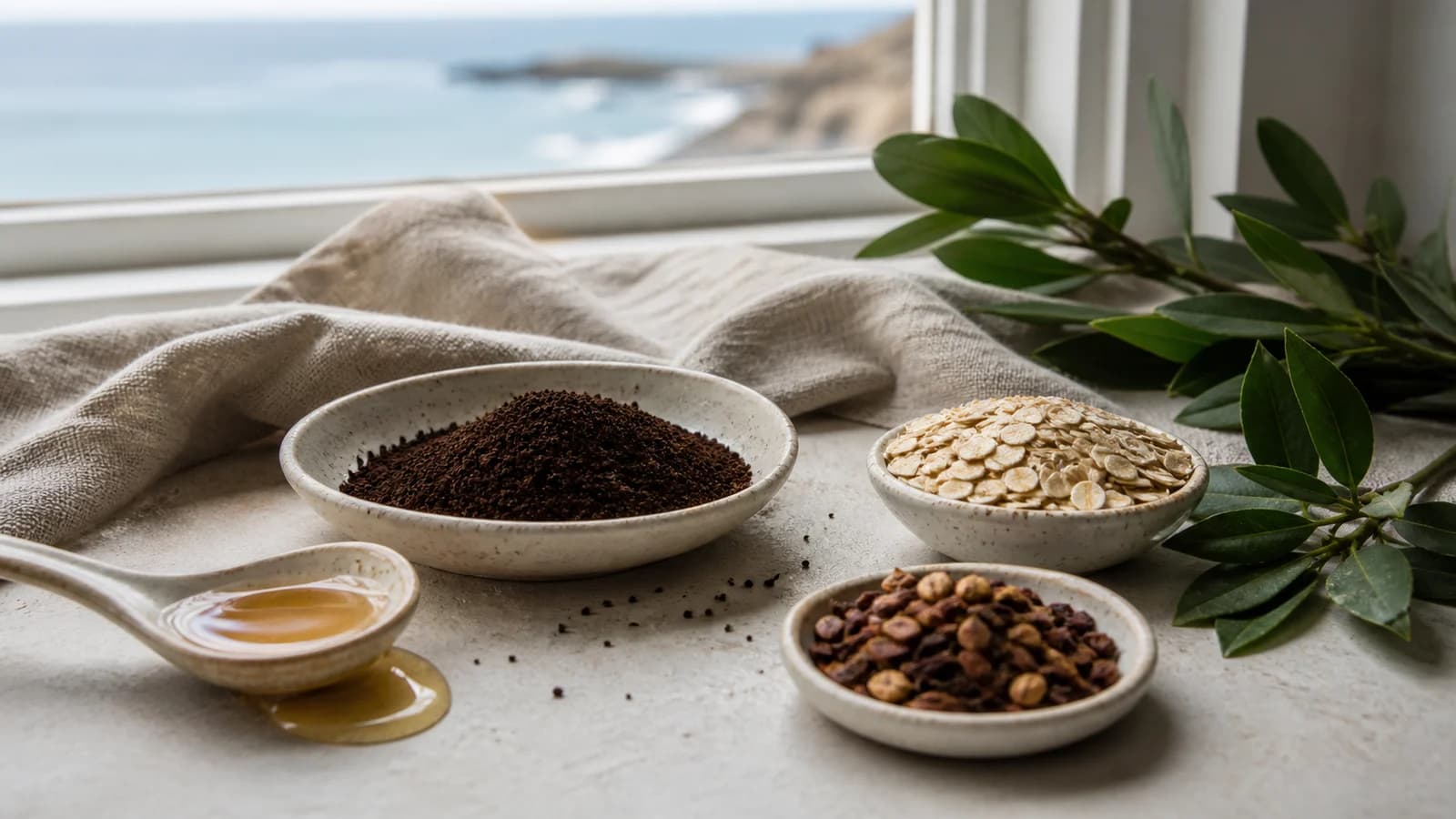
Coffee grounds, botanical powders, and honey-style bases can be useful in a face exfoliator when the formula gives enough glide. What you want to avoid is dragging dry particles over dry skin, rushing the massage, or using firm pressure because you want a faster result.
Think of exfoliation as loosening what is ready to move, not forcing the skin into brightness.
| Exfoliation choice | Best suited to | Watch for |
|---|---|---|
| Fine botanical texture | Dull or rough-feeling skin | Use light pressure and damp skin |
| Creamy or honey-style base | Dry-feeling or mature skin | Rinse thoroughly and follow with moisture |
| Strong, coarse scrub | Body skin, not usually the face | Can feel too intense on reactive-feeling skin |
| Daily exfoliating habit | Rarely necessary | Skin may feel unsettled if overdone |
The face is not the place for proving toughness. A softer, slower method is usually the better one.
How often should you exfoliate your face?
Most people do not need to exfoliate every day. For many NZ skin types, once a week is a calm starting point. Some people may prefer every 10 to 14 days, especially if their skin is dry-feeling, mature, or easily unsettled.
Use your skin as the guide:
- Start with once weekly in the evening.
- Use a small amount on damp skin.
- Massage with very light fingertip pressure for less than a minute.
- Rinse well with lukewarm water.
- Follow with a comforting moisturiser or serum.
If your skin feels smooth and settled the next morning, that rhythm may suit you. If it feels tight or reactive-feeling, stretch the gap further.
For a deeper timing guide, read our journal note on how often to exfoliate your face.
Where exfoliation belongs in your skincare ritual
Exfoliation works best as a small supporting step, not the centre of the whole ritual. Cleanse first, exfoliate only when needed, then return moisture and comfort to the skin.
A simple evening ritual might look like this:
- Cleanse with a non-foaming cleanser
- Exfoliate gently, if it is your exfoliation night
- Rinse thoroughly and pat dry
- Apply a serum that suits your skin's current feel
- Finish with a night cream or moisturiser
If your skin tends to feel dry after cleansing, pair exfoliation nights with a soft first cleanse. The Lisah-Khayil honey cream cleanser is a non-foaming cleanser option for skin that prefers comfort over a stripped feeling.
On nights when your skin feels especially delicate, skip exfoliation. A quiet cleanse and moisture step is enough.
Choosing a natural face exfoliator for dry-feeling skin
Dry-feeling skin often needs care with exfoliation because roughness and dryness can feel similar. It can be tempting to scrub more when skin feels flaky, but flakes can also be a sign that the skin wants more moisture and less friction.
Before exfoliating, ask:
- Does my skin feel comfortable after cleansing?
- Have I used other active-feeling products this week?
- Is there visible roughness, or does my skin simply feel tight?
- Can I use lighter pressure than I think I need?
If the answer points to tightness rather than surface buildup, focus on moisturising first. A barrier support serum can sit after cleansing when skin feels like it needs extra comfort before cream.
If your skin does feel ready for exfoliation, keep it brief. A fine botanical exfoliator used gently can help skin feel smoother without turning the whole evening ritual into work.
What to use after exfoliating
After exfoliating, the simplest next step is moisture. Skin should not be left bare while it is freshly cleansed and polished.
Choose textures that feel calm and replenishing:
- A hydrating serum if your skin feels thirsty
- A botanical day cream or night cream, depending on timing
- A richer cream if your skin feels dry or mature
- A simpler routine if your skin feels reactive-feeling
Avoid stacking too many strong-feeling steps on the same evening. Exfoliation already asks something of the skin. Let the rest of the ritual be quiet.
If you exfoliate in the evening, a botanical night cream can help the ritual feel complete without adding more texture or friction.
A calm method for using a botanical face exfoliator
The method matters as much as the product.
Start with clean, damp skin. Warm a small amount between your fingertips, then press it lightly over the cheeks, forehead, chin, and nose. Use small circles with barely-there pressure. Avoid the eye area and any place that already feels unsettled.
Keep the massage short. Rinse until the skin feels clean, then pat dry with a soft towel. Apply serum and moisturiser while your skin still feels fresh.
The finish should feel soft, not raw. If you feel you need to "push through" discomfort, stop. Skincare should give you information about your skin, not a challenge to win.
FAQ
Is a natural face exfoliator good for sensitive-feeling skin?
It can be, if the texture is fine, the base has enough slip, and you use very light pressure. Start less often than you think you need, and skip exfoliation when skin feels reactive-feeling.
Should I use a face exfoliator in the morning or evening?
Evening is usually the calmer choice. You can cleanse, exfoliate briefly, rinse well, then follow with serum and moisturiser without rushing.
Can I exfoliate if my skin feels dry?
Sometimes, but dryness needs judgement. If your skin feels tight, focus on moisture first. If it feels rough or dull on the surface, exfoliate gently and follow with a comforting moisturiser.
What is the difference between a cleanser and an exfoliator?
A cleanser removes the day's residue from the skin. An exfoliator is an occasional smoothing step that helps lift dull surface buildup. Use your cleanser regularly, and your exfoliator only when your skin feels ready.
Do I need a separate exfoliator if I use a cream cleanser?
Usually, yes. A cream cleanser is for cleansing comfort. A face exfoliator has a textured role and should be used less often.
A quieter way to smooth
The best natural face exfoliator is not the one that feels strongest. It is the one you can use gently, rinse away cleanly, and follow with a ritual that leaves your skin feeling calm.
For a slower exfoliation night, start with the botanical face exfoliator, keep your pressure light, and let the rest of the ritual stay simple.